


Fireboy and Watergirl Forest Temple: A Practical Cooperation Guide
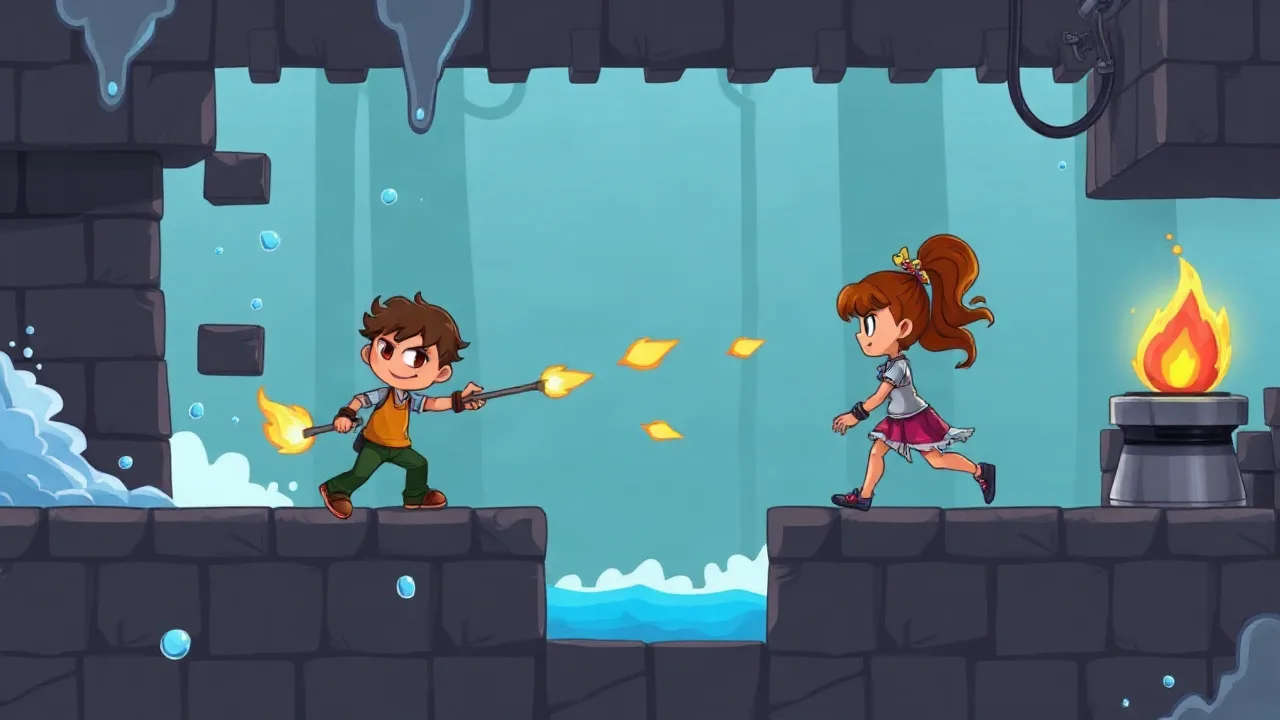
Fireboy and Watergirl: Forest Temple turns one screen into a shared planning problem. Fireboy moves with the arrow keys, Watergirl uses WASD, and both characters must survive the hazards, collect suitable gems and reach their exits. You can open Fireboy and Watergirl: Forest Temple Game for the exact game covered here, then browse Puzzle Games when you want another challenge built around observation and deliberate moves.
Fireboy Water Girl remains a beloved classic in the world of browser-based puzzles, offering a perfect blend of cooperation and challenge. Whether you are revisiting the series or discovering it for the first time, this guide will walk you through everything you need to know to conquer every level and enjoy the elemental adventure.
Understanding the Core Mechanics of the Elemental Duo
The heart of this game lies in its unique dual-character control scheme. Players must simultaneously guide two distinct heroes through hazardous environments filled with deadly liquids. The primary objective is to reach the exit door for each character. Success requires splitting your attention and developing a rhythm between movement and puzzle-solving, making it a standout title in any game catalog.
Mastering the Movement and Physics
Unlike standard platformers, the physics in this series feel slightly floaty, designed to give you time to react to environmental hazards. Fireboy is immune to lava but dissolves in water, while Watergirl is immune to water but melts in lava. You must navigate them using the arrow keys for Fireboy and the WASD keys for Watergirl. Mastering the jump height and momentum is crucial for clearing wide gaps and avoiding instant death.
Elemental Hazards and Safe Zones
Quick Reference Guide
| Feature | Details |
|---|---|
| Gameplay Style | Cooperative Puzzle Platformer |
| Controls | Arrow Keys (Fireboy) and WASD (Watergirl) |
| Session Pace | Relaxed but requires quick reflexes |
| Device Fit | Best played on Desktop or Laptop |
| Category Match | Logic Puzzles and Skill Challenges |
Strategies for Cooperative Play
While it is possible to play solo by toggling between characters, the game is best experienced with a friend. Communication is key; one player should act as the "scout" to trigger buttons or move platforms, while the other waits in a safe position. If you are playing alone, try to move both characters to the same vertical level before progressing to avoid leaving one stranded behind a locked gate.
Collecting Gems for a High Score
Red and blue gems give each character a clear collection route. Treat every pickup as optional until you have confirmed that both heroes still have a safe path to their exits.
Utilizing Buttons and Levers
Almost every level features mechanical elements activated by buttons. Standing on a button usually opens a corresponding gate or moves a platform. In many puzzles, you will need to place one character on a button to hold a door open so the other can pass through. Learning to recognize the color or shape matching between buttons and gates is essential for progression.
Why This Game Fits Your Browser Games Collection
Fireboy Water Girl is an ideal addition to any collection of free online games because it offers instant accessibility with no downloads required. It serves as an excellent test of logic and coordination. If you are looking for online games that provide both entertainment and a mental workout, this series is a timeless choice that fits perfectly into any library of browser games.
Begin by reading the whole room
A useful first move is often no move at all. Look from each starting position to the matching exit and identify the platforms, pools, gems and mechanisms between them. Then decide which character has the safer route and which one must help first. This short survey prevents the common mistake of sending one hero ahead only to discover that the other was needed beside a switch or on a different ledge. Treat the room as a sequence of dependencies: open a route, move the character who benefits, and only then release the helper.
When the screen is busy, divide it into small zones. Solve the first gate or crossing before planning the final jump. A local plan is easier to remember and easier to correct. It also keeps both characters close enough that you can see how one action changes the route for the other. If a mechanism moves a platform, watch one full cycle before committing. The extra second spent observing is cheaper than restarting after a rushed jump.
Use separate control rhythms
The two control schemes are close together on a keyboard, but they reward different hand rhythms. If two people are sharing the keyboard, agree on who controls which character and avoid reaching across the other player's keys. If one person is handling both, move one hero to a stable position, release the keys, and then switch attention. Trying to make two difficult jumps at exactly the same moment creates errors that the puzzle rarely demands.
Practice short movements before long ones. Tap a direction to learn how quickly a character accelerates, then test a jump from a safe platform. The goal is to build a reliable sense of distance. Once that feel is established, narrow ledges and moving platforms become planning exercises instead of guesses. Keep the camera view and the other character's position in mind, especially when an action changes a route elsewhere on the screen.
Keep elemental safety simple
Fireboy and Watergirl are a pair, but they are not interchangeable. Before crossing a colored hazard, verify which character belongs there. Neutral dangerous areas should be treated as unsafe for both. This simple check matters most when you are moving quickly after opening a gate, because momentum can carry the wrong character into a pool. Stop on solid ground, confirm the color, and continue only when the route matches the hero.
The same discipline helps with gems. Send each character toward the collectible that matches them and avoid detours that create unnecessary exposure to hazards. A gem is useful only if both heroes still reach the exits. When a collectible sits near a difficult edge, solve the safe exit route first in your head, then decide whether the pickup fits that route. This keeps score chasing from undermining completion.
Coordinate switches, platforms and exits
When one character must hold a mechanism, place them squarely on it and confirm the connected object has finished moving. The second character can then cross without forcing the helper to adjust. If the mechanism does not stay active, break the action into smaller tests: step on, observe, step off, and note exactly what changes. Understanding the connection is more reliable than repeatedly rushing through.
At the end of a room, bring both heroes near their own exits before committing either one. This avoids a lopsided finish in which one character is safe but the other remains behind a closed route. Think of the exits as a paired objective. The level is not solved by a fast Fireboy run or a perfect Watergirl route alone; it is solved when both paths work together.
A recovery routine for difficult rooms
If you restart several times at the same point, identify the exact failure instead of repeating the full attempt unchanged. Was the route misunderstood, was the wrong character used, or was the jump mistimed? Change one variable on the next attempt. Move the helper earlier, wait for a platform cycle, or use a shorter approach. A specific correction produces progress; a faster version of the same mistake usually does not.
For two-player sessions, use short callouts such as “hold,” “cross,” and “release.” Long explanations during a moving-platform sequence can cause missed inputs. Discuss the plan while both characters are safe, then execute with simple cues. For solo play, pause your hands between stages and say the next action mentally. That small reset makes it easier to separate the two control schemes.
Questions players often ask
Which keys control each character? Fireboy uses the arrow keys and Watergirl uses WASD in the game record checked for this guide. Do both characters have to finish? The central objective is cooperative: keep both safe and guide them to their respective exits. Should every gem be collected immediately? No. First confirm that the pickup belongs to that character and that the detour does not compromise the route.
What is the best way to improve? Read the room before moving, practise controlled jumps, and change one failed decision at a time. The game rewards coordination more than speed. A clean solution in which each hero performs a clear role is easier to repeat than an improvised rush.
Turn completion into a cleaner second run
After both characters reach their exits, think back to the part that caused the longest delay. A second attempt should target that section rather than simply trying to move faster everywhere. Decide in advance who activates the mechanism, where the waiting character will stand and which gem detours remain worthwhile. This creates a shorter route through better decisions, not through reckless inputs. If the revised plan works, keep it and refine the next slow section on a later run.
For a pair of players, swap characters after a successful completion. The change reveals whether the route was genuinely understood or whether one person carried the difficult actions. For a solo player, reverse the usual order of safe setup where the room permits it and compare the result. The objective is not novelty for its own sake; it is to understand why the cooperation works well enough that the solution can be repeated calmly.