


Best Waterboy Firegirl Game Tips and Tricks
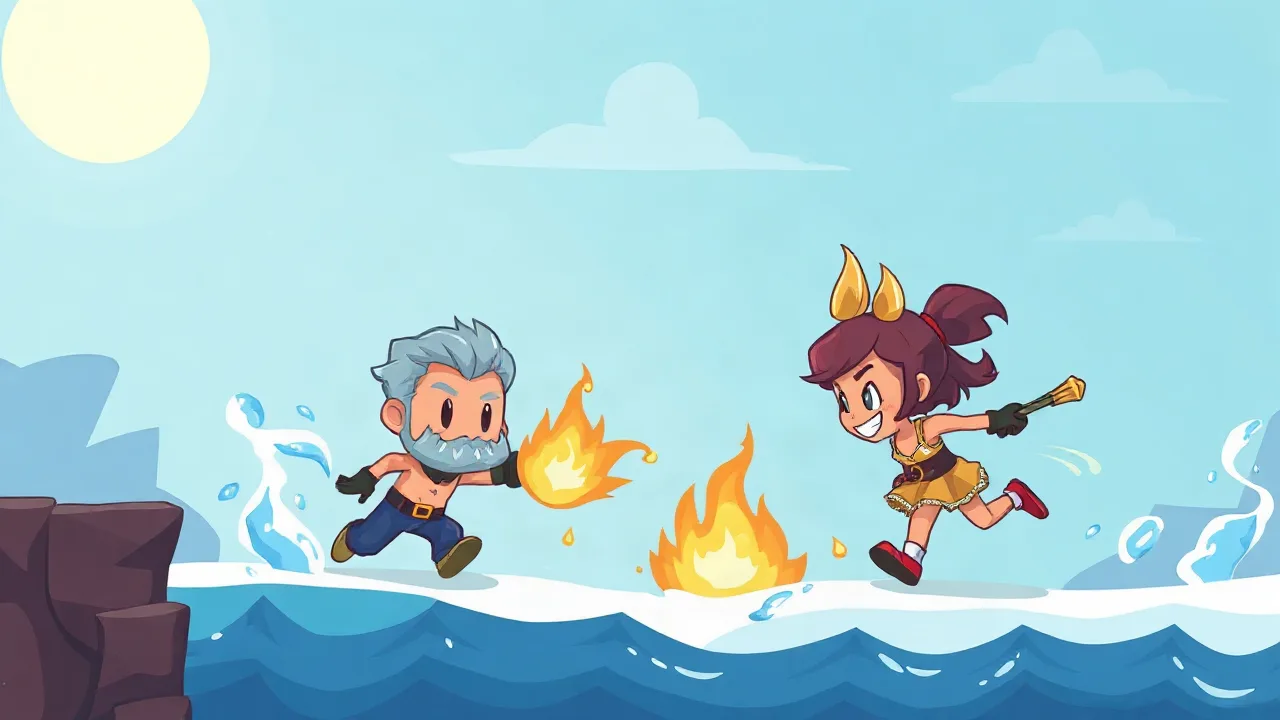
The Waterboy Firegirl Game is a classic two-character platformer that puts you in control of two heroes with opposite elemental powers. Waterboy puts out flames and passes through water safely, while Firegirl melts ice and is immune to heat, so you will need to switch between them and solve each level together. This page gathers practical tips, control notes, and quick strategies to help you clear stages faster and enjoy every session.
Understanding the Elemental Duo
How Waterboy and Firegirl Powers Work
Each character reacts to hazards in a specific way. Waterboy is safe in water but takes damage from lava and fire, while Firegirl can walk through fire and lava but is harmed by water and ice. Levels are built around these rules, so the path that is deadly for one hero is often safe for the other. Learning to read the room before moving is the fastest way to avoid losing a life.
Pay attention to colored pools and traps on the floor. Blue liquid is usually water, red or orange areas are fire or lava, and white or pale sections are ice. When you spot a hazard, plan which character should take the lead and which should follow behind on safer ground.
Core Controls and Movement Basics
Most builds of the game use separate key sets for each character, with one set for Waterboy and another for Firegirl. Move left, jump, and interact using the assigned keys for each hero. Practice moving both characters at the same time so you can keep them close without bumping into hazards. Short, controlled jumps are safer than long leaps when the floor below is dangerous.
If a section feels crowded, move one character to a safe ledge first, then bring the second character across. This split approach keeps both heroes alive and makes tight platforming sections much easier to handle.
| Feature | Details |
|---|---|
| Gameplay style | Two-character cooperative platformer with elemental hazards |
| Controls | Separate key sets for Waterboy and Firegirl, with jump and movement actions |
| Session pace | Short puzzle-platform rounds that reward careful planning |
| Device fit | Works well on desktop with a keyboard for dual control |
| Category match | Puzzle, platform, and cooperative challenge play |
Level Reading and Route Planning
Before either hero moves, scan the level from left to right. Look for switches, doors, keys, and pools that only one character can survive. The best route often requires sending one hero ahead to hold a button or open a gate while the other waits on safe ground. Take a moment to map the path in your head, then execute it in small steps.
Watch for sections where the two characters must split up. If one side has fire and the other has water, assign the matching hero to each path. This simple habit prevents most accidental deaths and keeps your run moving smoothly.
Timing Jumps Around Hazards
Jump timing matters most near moving platforms, spikes, and liquid surfaces. Wait for a platform to reach its closest point before jumping, and avoid leaping over a hazard until you are sure the landing zone is safe for that character. If a jump feels risky, step back and try a slower approach instead of rushing through.
When crossing a pool that damages one hero, jump in short bursts and land on the nearest safe tile. This keeps both characters close together and reduces the chance of one hero falling behind into danger.
Working Together Through Doors and Switches
Many stages use doors that need a key or a switch held down by the other character. Position one hero on the switch and move the second hero through the door quickly. If the door closes behind you, plan a return path that does not force the waiting character into a hazard.
Communication with yourself matters here, since you control both heroes. Call out positions mentally: one hero waits, one hero moves, then swap roles when the next gate appears. This rhythm makes cooperative sections feel natural instead of stressful.
Common Mistakes That Cost Lives
Rushing both characters through a hazard at the same time is the most common error. Another frequent mistake is ignoring the color of a pool before stepping in, which leads to instant damage for the wrong hero. Finally, skipping a quick scan of the level often results in missing a safe route that was available the whole time.
Slow down at the start of each stage. A few seconds of planning saves far more time than restarting after a careless death.
Getting Better With Each Run
Each attempt teaches you where hazards hide and how the level flows. Replay stages you struggled with and focus on one weakness at a time, such as jump timing or switch placement. Over a few sessions, your route planning will become faster and your deaths will drop sharply.
When you are ready to test your skills, jump into the Waterboy Firegirl Game and put these strategies to work. If you enjoy cooperative puzzle challenges, you can explore more games in our game catalog to find your next favorite title.
Frequently Asked Questions
Do I need two players to enjoy the game? No. You control both Waterboy and Firegirl on your own, switching between them as the level demands.
What should I do if one character keeps dying? Slow down, scan the level for hazards, and move the safe character to a waiting position before guiding the other across.
Are the controls hard to learn? The basic movement and jump actions are simple. The challenge comes from coordinating both heroes at once, which improves with a few practice runs.
How long does a typical level take? Most stages are short and designed for quick play sessions, so you can finish a round in a few minutes once you know the route.